
CLICK: Color Control Color Choice
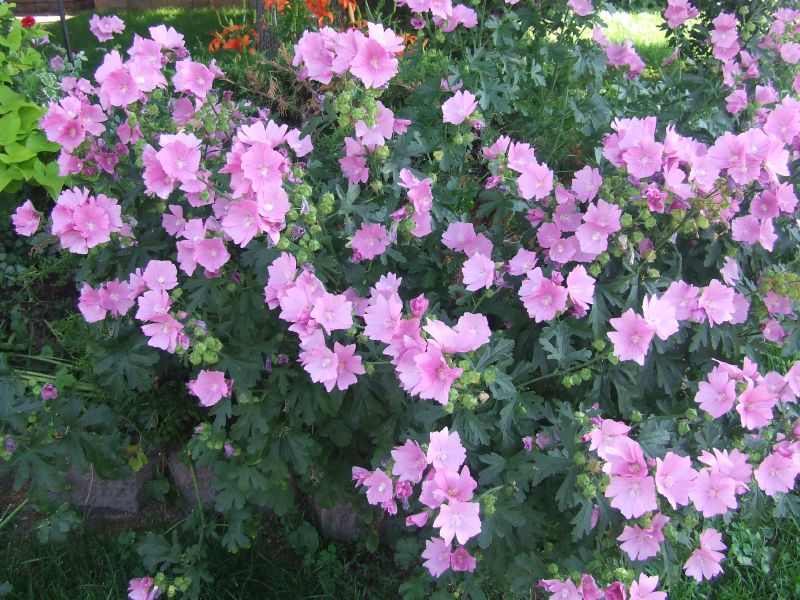
Image of Rose Mallow herb: Northdays Image: Natural Light Photos
Horticultural Society leaders urge us not to transplant
plants from the woods, and it is especially unsafe to transplant those
plants which often live near water sources.
If a plant is used by animals
in the wild as an expectorant or for bronchial infections, disease could
be carried back to your garden, also leeches and crayfish eggs. Sometimes
minnow eggs get pulled right into plants, so that the herbal qualities of
your garden are not as well controlled.
I will never forget starting
my first herb garden next to the River Misssissippi and not having a water
hose outlet. Painstakingly, and with all my strength, I hauled five gallon
buckets of river water one by one , to water in my seeds and roots.
It is
not that good an idea, but my garden was exquisite, for what it was. Where
they had paved paradise and put up a parking lot, I degravelled and junked
what seemed to be an interminable junk heap full of car parts and broken
glass.
I found some exquisite White Mallow plants, which grew in the vacant lot next to my reclaimed parking lot. My plants did not come up the next year (from their seed) and I have had trouble growing these, myself. However, Ontario gardens show thousands of stands, like the one above, in their gardens- and they are perennials.
Mallow enjoys the folk names mallards, mauls,and also Mortification root.It was historically grown or laid upon graves.
I feel that my best Mallow
name discovery is from an obscure reference I found, rather excitedly, as I
researched the plant on the net.
What is ma-ning nyi-dga'? And what could mo-lcam
rgya dkar gnyis be? Respectively, the names are Tibetan for neuter Mallow and
female Mallow (Malva verticillala / Althaea). Bet you didn't know that!
Tibetan Name:
mo-lcam rgya dkar gnyis
"Female" variety of marsh mallow
Effects:
Alleviates urine retention, fever of the kidneys and diarrhoea
Tibetan Name:
ma-ning nyi-dga'
"Neuter" marsh mallow
Effects:
Alleviates urine retention, fever of the kidneys and diarrhoea
In this delightful and gifted site, I found actual Thankas (formal meditation Mandalas painted in the Tibetan style)of medicinal herbs, as well as paintings for dream analysis, embryology, blood vessels, etc (A Tibetan MAteria Medica)!!
The site lists actual names and properties of the herbs, besides having many thanka images of Buddha, green Tara, what is your eastward-turning hearts' desire?
Mallow (listings 39 and 40, and others: Click on the image bottom left and second left.
Interest: Medicine Thangkas - list of images:
 Mallow
is known by a few names, but is now more famous for its root qualities
which produce the "confectionary paste", "Pate de Guimauve", which was
used by French pharmacists and British sweet makers for soothing
chests and coughs. Marshmallows are manufactured of flour, egg,
egg-albumin and actually contain no Mallow.
Mallow
is known by a few names, but is now more famous for its root qualities
which produce the "confectionary paste", "Pate de Guimauve", which was
used by French pharmacists and British sweet makers for soothing
chests and coughs. Marshmallows are manufactured of flour, egg,
egg-albumin and actually contain no Mallow.
Canadian Marshmallow packages
define the delicious sweets as "Guimauve".
Of Note: The illustration to the left reflects what we recognize as Marsh Mallow. To research the "Fluffernutters" a marshmallow sandwich craze which delighted all in the sixties, tour the address below.
http://www.marshmallowfluff.com/
The true
Marsh Mallow is distinguished from other Mallows by numerous divisions of the
outer calyx, and by downy covering of stems and foliage, making it look as
comfortable as its reputation.
Mallow also has numerous pannicles of rosy
flowers, which are paler than Common Mallow.
The plant, particularly the
whitish-yellow root, contains a mild mucilage in a higher percentage than common
Mallow.
The name Althaea derives from altho (grk) to cure and malake(grk),or
soft.
Egyptians, Chinese, Romans,
Syrians,Greeks and Armenians used it as a vegetable, the Romans employing the
plant as a delicacy and the Syrians, Greeks and Armenians subsisting on it for
weeks.
This is the second herb mentioned in this website as a subsistence food in
history The other was mentioned in Plinys' writings as the primary food of
slaves, being the fig.
Mallow takes over in times of famine as a cropworthy
vegetable, and can be first boiled and then fried with onions and butter.
The
plant contains lecithin,sucrose and asparagin.Its seed is nicknamed cheeses, and
the plant makes a pleasant polysaccharide mucilage.
The thought of scrambling for Shirley poppies, mallows and figs does not tend to remind me of the gourmet dishes I have enjoyed, but anything is worth a shot in Lanark!
Arabic physicians made poultices of Mallow leaves to suppress inflammation.
Grow Comfrey and Mallow, and
also Boneset, and you will have temporary relief when your tendons are swollen,
or you have bruised your flesh.
Boneset is actually used as a poultice in much
the same way as Slippery Elm, to assist with fracture and bone breakage.
I have
used Comfrey as a wrap for leg injuries, first crushing its ample leaves, and
bandaging the herb around the knee.
It works mildly, but it does help.
If you use Mallow, The salycilic acid in this herb may be useful within the poultice.
In the wild, I imagine, one could match Willow and Mallow for temporary relief.
Spring shoots of Mallow are eaten raw in salads, and as a kidney stimulant, their roots are made into a syrup.
Orange flower water is added to the green stem made into a tea with honey
or orange juice for coughs and rough chest, whereas gin is recommended for
the tisane or syrup made for kidney "gravel" suffering.
The gin is used when
there is no inflammation of the kidneys present.
Recommended is a cup of Mallow tea three times a day, to which is added a tablespoon of gin.
I would consult my physician about the state of my kidneys, first, though, to make sure there is no kidney inflammation.
There are many recipe variations for the herbs qualities, also useful for the elderly, digestive problems,coughs and colds, and strangury.
 strangury
(stran'gu-re)
strangury
(stran'gu-re)
slow and painful discharge of urine
To make a soothing mucilage:
gently boil 1/2 to 1 teaspoon of dried root to 1 cup of water for 15 minutes.
Drink up to 3 cups a day. For wounds and external application add water to dried
ground root till you have a gel consistency to apply.
The plant is also used for a skin softener and to help cure leg or varicose ulcers
There are several varieties of
Mallow, Dwarf Mallow, having pale lilac flowers and Tree Sea Mallow, five or six
feet high, also Musk Mallow which has rosy flowers, sometimes purple spotted
foliage and a faint, musky odour.
Tree Sea Mallow is used for sprains.Its
qualities are milder in their medicinal value.
Blue Mallow has showy,bright
mauve-purple flowers with dark veins. This type is used for poultices. Its
flowers, which, in fading, turn blue, in tincture give a delicate test for
alkalis.
(How lost hydraulicists win the pollution war on a budget!)
On May Day, folk used to use the plant for strewing and weaving into garlands.
"Mallow has astringent, demulcent, emollient, expectorant properties and is used for the digestive systems and lungs. It can also be taken for laryngitis, emphysema, and lung catarrh, and for catarrhal gastritis and enteritis."
"The leaves...minerals and vitamins (calcium, iron, vitamin C, copper traces and more) .. an abundant, free source of organic nutrition."
The above info has been derived from a now defunct url: http://www.naturedirect2u.com/
Constituents:
Mucilage, essential oil and trace of tannin. Actions: Demulcent, anti-inflammatory, expectorant, astringent.
http://www.quantal.demon.co.uk/saga/ooc/herbs.html
http://www.quantal.demon.co.uk/saga/index.html
Love Potions
Medicinal use:
all-heal Magic & beliefs:
Mallow was an important ingredient in love potions. In addition, Pliny also reminds us that "those who carry mallow on their person are protected from all kinds of scorpion stings."
http://www.saveafluff.co.uk/rabbit-info/safe-foods-for-rabbits Safe herbs for Rabbits and Guinea pigs
Available through Google Books (Random House) :"The Healing Herbs: The Ultimate Guide to the Curative Power of Nature's Medicines"
By Michael Castleman, Sheldon Saul Hendler
Immune System: Recent studies showed the Mallows enhanced white blood
cells ability to devour disease microbes.
Blood Sugar: The root has been shown to reduce blood sugar which shows promise in helping those with diabetes.
Tibetan Medicinal Plants and Their Healing Potentials by Franz-Karl Ehrhard & Petra Maurer (Hrsg.)
Turquoise Bee blog: Leaving for China and Tibet, painted wildflower images, etc.
This is an fun cartoon site.
Blogged: Cloud-Shaped Marshmallows
Ontario: Swamp Rose Mallow: A species of special concern
What threatens it:
Wetland drainage, shoreline development, and the spread of invasive species, are the main threats for the Swamp rose-mallow in Ontario. Through natural succession, its habitat can be gradually overtaken by shrubs unless kept open by periodic flooding or fire. Two invasive plants, European common reed (Phragmites australis subsp. australis) and hybrid cattail (Typha x glauca), have recently spread into some of the sites, where they crowd out Swamp rose-mallow and other native plants.
Textual References:
p.84 The Natural Pharmacy Miriam Polunin and Christopher Robbins
Raincoast Books Vancouver.
The Encyclopaedia of Herbs and Herbalism , p. 150
A Modern Herbal
by Mrs Grieves .p.506.